


As the commercial property market resets for 2026, a quiet but significant shift is underway. Faced with more selective, compliance-screened capital, high construction costs and ongoing pressure to decarbonise, owners and investors are re-examining long-held assumptions about how best to create value. For many, this has prompted a renewed focus on the potential of existing assets and a more disciplined approach to deciding when reinvention, rather than replacement, is the right course.
Across commercial estates, the emphasis is moving away from demolish-and-replace as an automatic response towards a more nuanced, option-led evaluation of reinvention, retrofit, replacement and repositioning. Strategic reinvention is no longer defined solely by whether a building is retained, but by how value is created and preserved across the full lifecycle of development. Increasingly, this includes circular economy approaches - where materials never become waste but are continually reused, sometimes in different forms - seeking to retain embodied value through recovery, reuse and redistribution, even where replacement ultimately proves the right outcome.
Doing so successfully requires whole-building, whole-life thinking, underpinned by clarity of judgement as much as technical analysis. Regulation and Environmental, Social and Governance (ESG) frameworks are assessing performance at whole-building level, particularly energy use and carbon outputs, reinforcing this approach. Investors are responding by focusing not just on design intent, but on the long-term implications of owning a building’s operational and embodied carbon profile, and the risks that brings if performance falls short. In this regard, G&T is encouraging clients to include clear contractual obligations requiring contractors to meet pre-agreed embodied carbon performance targets. This is supported through tailored building contract clauses that align incentives between clients and contractors, helping to drive the best possible embodied carbon outcomes for a development. The approach provides greater certainty that targets can be achieved, while offering clarity around roles, responsibilities and accountability.
Where replacement is pursued, the same principles increasingly apply. Circular economy strategies including the recovery and reuse of materials within wider development portfolios, or across the market, are becoming a critical tool for managing embodied carbon risk and supporting net zero commitments, while also protecting long-term asset value.
Long-term value creation in a constrained market
In today’s market, value is increasingly defined by resilience. Buildings must respond to evolving occupier expectations, tightening regulation and heightened scrutiny around environmental performance. Assets that cannot adapt risk accelerated obsolescence, regardless of their original specification or design intent.
Strategic reinvention offers a compelling route to protecting and enhancing long-term value. By extending asset life where appropriate, improving operational performance and reducing exposure to planning, programme and cost risk, reinvestment can deliver strong outcomes in the right circumstances. It also plays an increasingly important role in addressing embodied carbon and net zero carbon considerations, which are now central to investor decision-making and long-term asset resilience.
The most effective strategies start with a clear-eyed assessment of options - whether reinvention, replacement or a hybrid approach - and select the path that delivers the strongest long-term outcome.
This reflects a broader reassessment of what “best value” really means. Short-term yield optimisation is giving way to a more holistic view that considers whole-life cost, adaptability and future performance as core components of investment strategy.
Whole-building, whole-life thinking
Reimagining existing assets successfully depends on understanding how buildings perform as integrated systems over time. Decisions around structure, services, envelope and layout are inherently interlinked, with implications for cost, carbon, programme and operational efficiency throughout the life of the asset.
Whole-building, whole-life thinking brings these considerations together early, allowing clients to test options properly before committing to a defined route. Feasibility studies, optioneering and scenario testing provide clarity on trade-offs - between capital investment and operational performance, speed of delivery and longevity, or sustainability ambitions and commercial constraints.
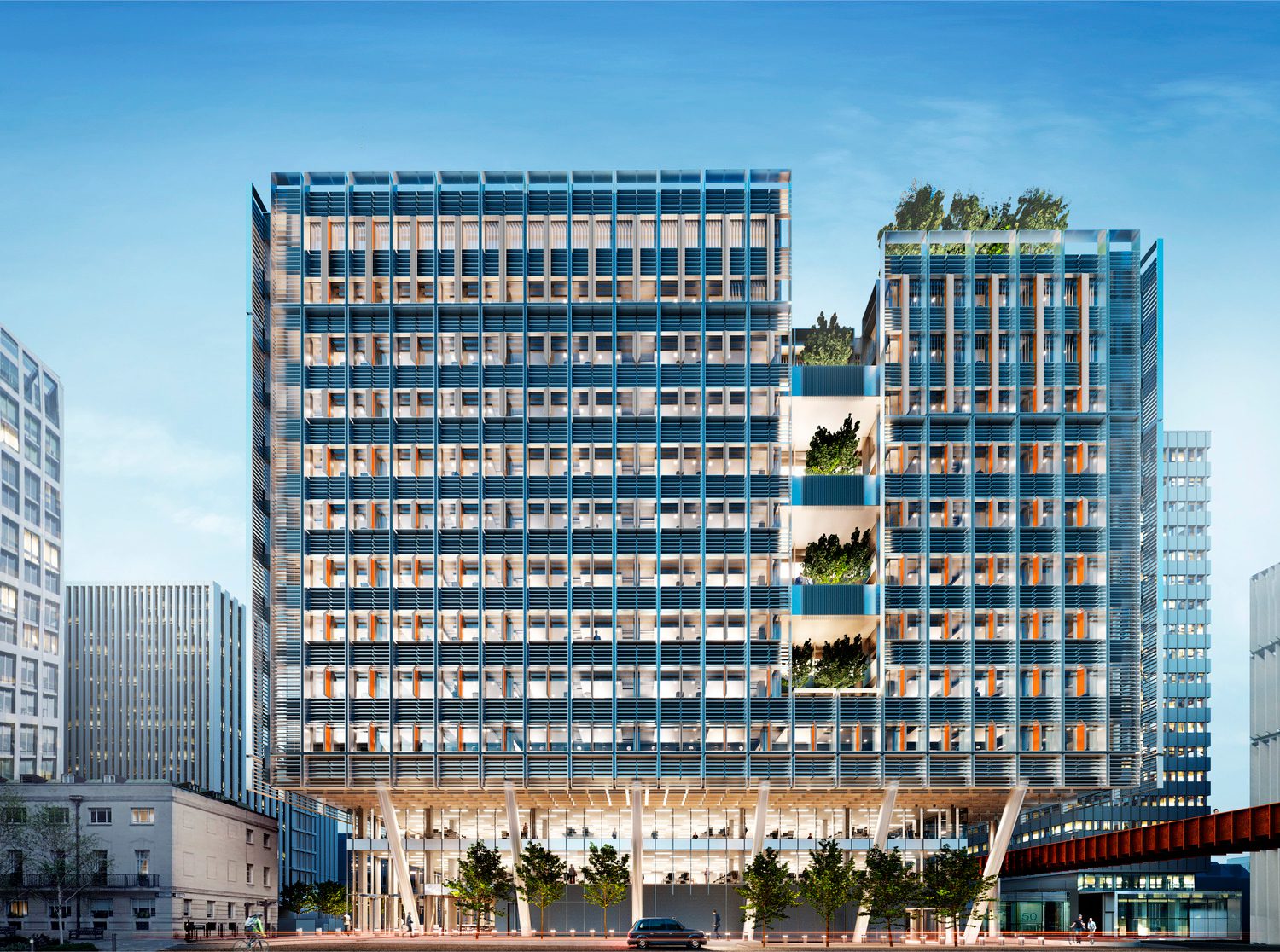
This approach is evident across commercial reinvention projects, from large-scale estates to tightly constrained urban assets. At 2 Aldermanbury Square, whole-life optioneering tested retention, partial reuse and replacement scenarios before redevelopment was selected as the most viable route. Crucially, replacement was not treated as a linear process.
Imagery courtesy of © Knighton Estates Limited
The existing steel-framed structure was assessed for reuse, enabling approximately 1,400 tonnes of steel to be salvaged rather than recycled. Around 30 tonnes were reused directly within the new development, with the remainder redeployed across the client’s wider central London portfolio - retaining embodied value and materially reducing carbon impact. Alongside this, a combination of material optimisation, lower-carbon specifications and construction methodologies helped drive a 36% reduction in embodied carbon against the initial design baseline.
The project demonstrates how early, whole-building thinking can unlock circular economy outcomes even where redevelopment is the chosen route.
“At projects like 2 Aldermanbury Square, the most important decisions are made before a route is fixed. Early, independent scrutiny allowed the client to test retention, reuse and replacement options properly, and secure circular economy outcomes, such as steel reuse, that would otherwise be designed out once a linear delivery path is set.”Andrew Browne
G&T Partner, Cost Consultancy
Delivery in practice: 1 Broadgate
The redevelopment of 1 Broadgate demonstrates how a strategic approach to reinvention can unlock long-term value within an established commercial estate. Rather than treating replacement as a linear process, the client’s focus was on enhancing overall performance through circular economy principles wherever practical, including the recovery and redistribution of steel and other materials including circa 70m3 of granite from the façade of the previous building, which was crushed and used in the new terrazzo flooring throughout the building. This still allowed British Land to deliver a building aligned to contemporary occupier expectations and attracted JLL and Allen & Overy Shearman to select the building as their new UK headquarters.
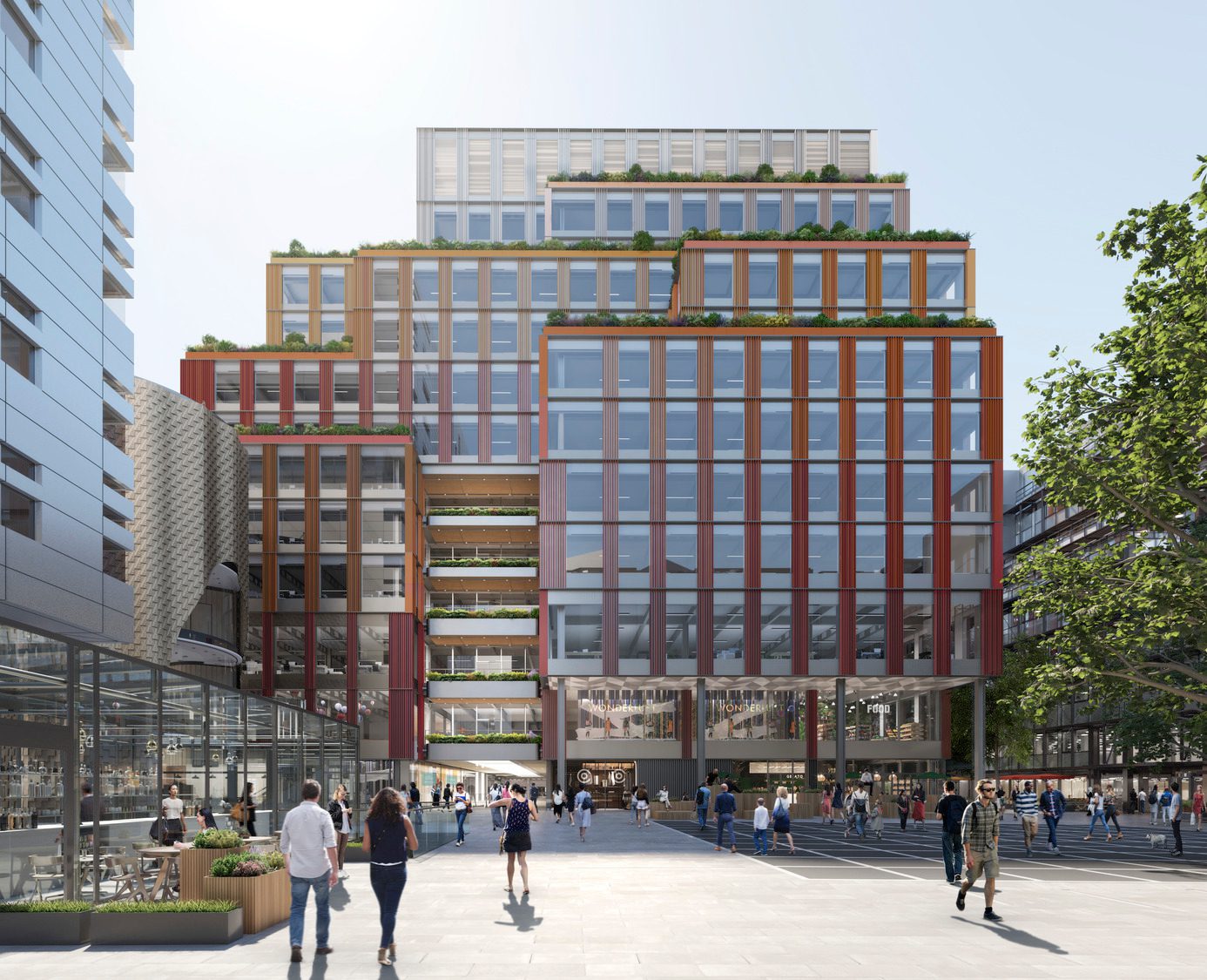
Central to this approach was a clear understanding of the asset’s existing strengths and constraints, alongside a pragmatic delivery strategy. Careful phasing, coordination and risk management were essential to maintaining momentum and minimising disruption within a complex, live environment.

“1 Broadgate shows that replacement doesn’t have to be a linear process. With circular economy principles embedded from the outset, the project retained embodied value through material recovery and reuse, while delivering a building aligned to modern performance expectations.”Richard Applin
G&T Partner, Project Leadership
ESG and carbon: whole-life value beyond the building
Environmental performance is now a defining factor in commercial decision-making, but the most resilient estates are taking a broader, whole-life view of ESG. Widely accepted industry benchmarks suggest that 40–70% of a building’s whole-life carbon is locked in before it is occupied, making early decisions around reuse, retrofit and replacement critical to long-term performance [1]. Increasingly, this includes circular economy measures that allow embodied carbon to be reduced even where buildings are replaced, reinforcing the importance of early, whole-life decision-making.
Estate-wide strategies are recognising the importance of social value and long-term relevance alongside carbon performance. At Broadgate, this wider lens has extended beyond the physical transformation of buildings to include investment in future skills, employability and workforce capability across the estate. It reflects an understanding that sustainable commercial environments are not only low-carbon, but also inclusive, adaptable and supportive of the people who use them.
For asset owners and investors, this integrated approach helps mitigate long-term risk. Buildings that perform well environmentally but fail to support evolving occupier expectations, talent needs or social outcomes remain vulnerable to obsolescence. Whole-life ESG thinking - spanning carbon, cost, functionality and social impact - is increasingly central to protecting value over time.
What clients should be asking now
As reinvention moves up the agenda, clients are asking more searching questions. Where will targeted reinvestment deliver the greatest long-term impact? Which interventions genuinely futureproof an asset, and which simply defer risk? How can carbon reduction, commercial performance and occupier experience be aligned rather than traded off?
Projects that succeed tend to share common characteristics - early clarity on objectives, robust optioneering and a willingness to challenge assumptions. Above all, they are informed by experience and combining data-led insight with an understanding of how buildings and markets behave under real-world conditions.
How G&T Helps
Strategic reinvention demands a different kind of decision-making. In a market where capital is increasingly selective and expectations are rising, progress depends less on momentum and more on clarity - understanding where reinvestment will genuinely protect and enhance long-term value, and where alternative strategies may be more appropriate.
G&T works with clients at the earliest stages of reinvention, helping them evaluate existing assets through a whole-building, whole-life approach. Data-led analysis, benchmarking and scenario testing provide a vital evidence base, enabling options to be compared on cost, carbon, programme and performance. But those insights are most powerful when combined with experience of how similar assets have performed through previous market cycles, and where assumptions have historically proved optimistic.
This balance of quantitative insight and practical judgement is particularly important where decisions are finely balanced - whether assessing the viability of an office retrofit, comparing reinvestment against replacement, or managing risk within complex, live commercial estates. It allows clients to explore options properly, understand trade-offs clearly, and move forward with intent.
In 2026, the challenge is rarely a lack of ambition. More often, it is uncertainty about how best to act. By combining robust analysis with seasoned delivery experience, G&T helps clients navigate complexity and commit to decisions that stand up over the long term.
Connect with our experts: Andrew Browne (Cost Consultancy) and Richard Applin (Project Leadership).


