



Building Insights: Cold Water, Hot Investment
Wellness infrastructure is reshaping real estate across typologies. Developers must engage earlier to deliver spaces designed around physiology, like contrast therapy, recovery programming, and longevity amenities are now building decisions.
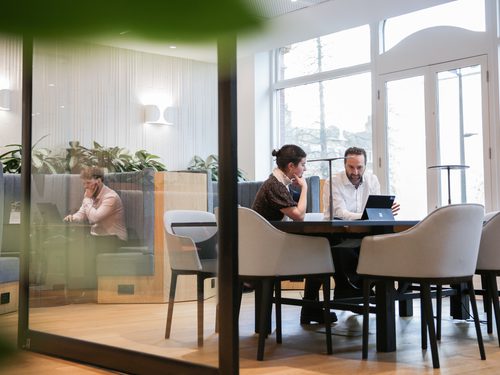
I was on vacation in Cape Town recently when I found myself doing what I always do, observing how the built environment is shifting. I visited the newly opened Virgin Active Collection Country Club at Green Point, a R100 million redevelopment of a traditional gym into something much harder to categorize: boutique fitness studios, contrast therapy and recovery facilities, co-working zones, on-site sports scientists, a health food café. It's wellness infrastructure, designed as experience, community, and long-term lifestyle positioning.
That visit crystallized something I've been watching build for a while: wellness is no longer an amenity. It's becoming embedded in real estate strategy, reshaping how we think about nearly every building typology.
From Pampering to Longevity
The clearest signal of this shift is the rise of contrast therapy (cold plunges, saunas, thermal cycling) as a mainstream practice. What was once niche athlete recovery protocol has entered everyday life. The science behind these practices, around cortisol regulation, inflammation, and nervous system resilience, has filtered from research into popular culture. A generation ago, the spa was largely a gendered space; today, people across demographics are seeking out cold immersion, heat exposure, and recovery programming because they understand the physiology.
This represents a genuine reorientation of what wellness means. The goal has shifted from relaxation as an end in itself to resilience: practices that are sometimes uncomfortable in the moment but deliver measurable benefit over time. People are looking to the built environment to support that, and developers are responding.

Wellness Real Estate was the fastest growing segment of the global wellness economy between 2019 and 2024. Source: Global Wellness Institute, 2025
Wellness Is Crossing Typologies
What makes this moment interesting from a real estate and construction perspective is where wellness elements are appearing. The Virgin Active Cape Town project is one example: a fitness operator repositioning as a premium social wellness hub, competing less with other gyms and more with co-working spaces and social clubs. Richard Branson framed it as a place to work out, unwind, work remotely, and meet people – a fundamentally different brief than a gym fit-out.
Hospitality has always led this category, but the bar is rising there too. The token hotel spa is giving way to full thermal experiences, recovery programming, and in some cases medical-adjacent offerings, including hyperbaric chambers, IV therapy, and diagnostic testing, that blur the line between spa and clinical facility. Luxury residential is moving in the same direction, with developers partnering with wellness brands to deliver amenity programs tied directly to building identity.
And then there are the unexpected spaces. Earlier this year, news broke that Bathhouse, a New York wellness brand built around communal bathing culture and contrast therapy, will take over the former Amoeba Music building on Sunset Boulevard in Los Angeles. Due to open in 2028, it will be Bathhouse's largest location. A Hollywood landmark, repurposed not for retail or office, but for recovery and restoration. As a signal of where capital is moving, it's hard to ignore.
Designed for Biology, Not Just Branding
One of the things I've come to appreciate through my Thermalist Method training with Dr. Susanna Søberg is that effective wellness environments aren't primarily about aesthetics. They are about how a space makes the nervous system feel. These environments have real operational logic behind them. The sequencing of hot and cold exposure, the flow between zones, the clarity of wayfinding: these aren't aesthetic choices. They are functional requirements that need to be resolved at the planning stage.
For those involved in planning and delivering these environments, this is a practical frame: the physiological experience of how a space sequences movement, manages sensory input, and supports safe thermal protocols is what determines whether a facility genuinely delivers on its promise. These aren't interior design decisions alone. They are building decisions, requiring cost planning, MEP coordination, and regulatory navigation from the earliest stages.
What is different about this moment is not that wellness is new to the built environment. It is the scale, the science, and the expectation. Human performance is influencing capital decisions in ways that go well beyond New York or London. From Cape Town to Los Angeles, the spaces people want to inhabit are changing. The question for the industry is how quickly we adapt to help clients deliver them well.
As this sector continues to evolve, I am always glad to connect with others thinking seriously about how wellness is reshaping the built environment, whether from a development, design, or delivery perspective.
Lindsey Brake is a Senior Associate Director at Gardiner & Theobald LLC, specializing in wellness facility planning and cost management across hospitality, residential, and mixed-use sectors. She is a certified Thermalist® instructor, trained in thermal practices by Dr. Susanna Søberg in Sweden.